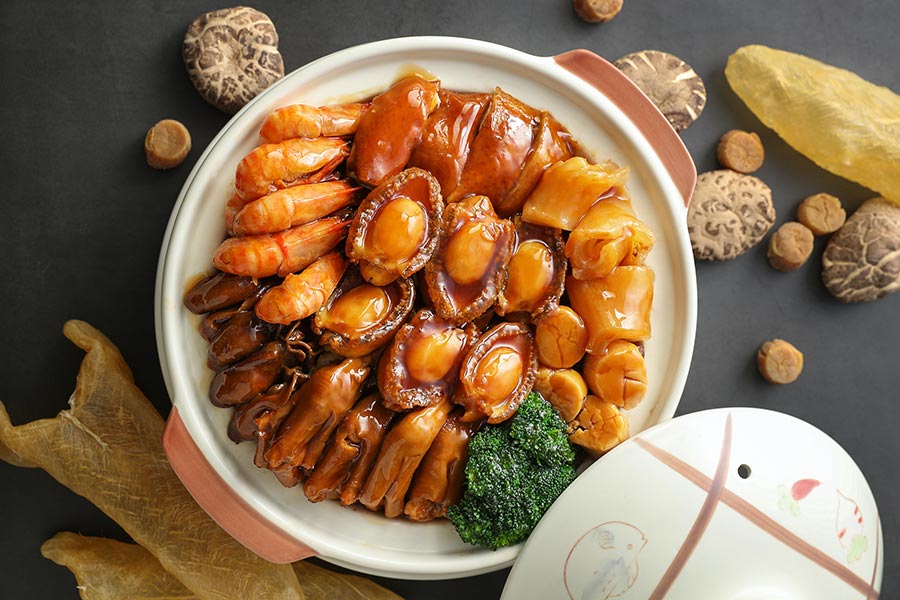
Buddha Jumps Over the Wall
Introduction
"Buddha Jumps Over the Wall," also known as "Fotiaoqiang," is a renowned and luxurious dish originating from Fujian province in China. Known for its rich flavor and intricate preparation, this dish is a staple of Fujian cuisine and is often considered a symbol of prosperity and culinary artistry. The dish involves a complex combination of ingredients such as abalone, sea cucumber, dried scallops, and more, simmered together to create a fragrant and flavorful soup. The dish's name, "Buddha Jumps Over the Wall," is derived from a legend in which the aroma of the dish was so enticing that it allegedly tempted a vegetarian monk to leap over a wall to taste it.
Ingredients and Preparation
The preparation of "Buddha Jumps Over the Wall" is an elaborate process that can take up to several days. The dish typically includes a variety of premium ingredients such as abalone, sea cucumber, dried scallops, fish maw, quail eggs, bamboo shoots, and pork. Each component is prepared separately before being combined in a clay pot or jar with a rich broth. This broth often includes ingredients such as chicken, ham, and Chinese herbs, all simmered to perfection. The cooking process requires careful attention to detail, with ingredients being cooked at specific temperatures to ensure that each retains its unique flavor and texture. The final product is a dish of complex layers of taste and aroma, which is both hearty and delicate.
Cultural Significance
"Buddha Jumps Over the Wall" is not just a dish; it carries cultural significance in Chinese society. It is often served during special occasions and celebrations as a symbol of wealth and good fortune. The dish's rich ingredients and lengthy preparation process symbolize the dedication and hospitality of the host. It is a testament to the culinary skills and traditions of Fujian chefs, who have preserved and passed down this recipe through generations. Due to its luxurious nature, the dish is also associated with Chinese imperial cuisine and is considered a culinary treasure.
Variations and Modern Interpretations
While the traditional recipe for "Buddha Jumps Over the Wall" remains a staple in many high-end Chinese restaurants, modern chefs have introduced variations to cater to contemporary tastes and dietary preferences. Some chefs experiment with the dish by incorporating non-traditional ingredients or altering the preparation methods to enhance flavors while maintaining the dish's essence. For instance, some variations might include truffle oil or replace pork with less fatty meats to appeal to health-conscious diners. Despite these modern twists, the core of the dish remains rooted in its Fujian origins, with an emphasis on using high-quality ingredients to achieve a harmonious blend of flavors.








